This post is in response to a request to talk about handling taxes when you have your own business.
People from over 104 countries read the Subconcious Tonic blog. I can't answer this in one way to apply to all people. But regardless of where you are, and as I've mentioned before, if you're doing business, do it legitimately. In the United States, that means, get a Tax ID.
A Tax ID allows you, as a service/product provider to sell goods or services legally. You can get a Tax ID from your local state comptroller's office. But you must register a business name in the Assumed Name office first. They are also a great resource to answer any other tax related questions.
TO CHARGE OR NOT TO CHARGE TAXES
Once you have your Tax ID, you are then able to use other vendors, such as printers, tax free! You're allowed to do this because you're going to turn around and sell that item to your client, and by law, you're supposed to charge sales tax.
For example. I am going to order 3000 brochures for a client. I've selected a printer, and once they are complete, I will pay for them. But if I show the printer I have a Tax ID, they will not charge me tax.
The idea is not to pay tax twice.
The sales tax you charge your customer will have to be paid to the state comptroller at the end of each fiscal year. Depending on how much money you make, you may have to pay taxes quarterly.
DO I HAVE TO PAY MORE TAXES DURING INCOME TAX TIME?
Yes. Because the money you are receiving is considered an additional source of income. So you are required, by law, to report any income and pay taxes on them.
WHAT ELSE IS A TAX ID USED FOR?
You're only allowed to use it when you're buying products that you will resell to a customer. I just made 15 hats for a client that had custom embroidery. I could buy those hats tax free from one vendor, and the vendor who did the embroidery could do it tax free as well. Get it?
Please post any questions you may have about your business below. Good luck! -Kelada
Thursday, November 6, 2008
How do I handle my taxes if I have my own business?

Thursday, June 26, 2008
What do companies look for when hiring a designer?

Most likely if you're at a design or ad agency, you'll get tons of questions. Here's what they will ask in most cases:
THE DESIGNER'S ROLE
They will want to know how much you participated in creating a piece. Did you just design the piece or did you actually concept it? Were you alone or did you work in a team of other creative vendors (writers, photographers, etc.) ? Did you have an art director?
If they ask you what you role was, be prepared to answer all these questions ON YOUR OWN, without them probing you. Just because designers communicate visually, doesn't mean they have to be impaired verbally.
PROJECT GOAL
If you don't know the project goal as a designer, whether you were the art director or just the intern, you're screwed my friend. You might as well just thank them for their time and get out!
Remember, your role as a graphic designer is to be a visual problem solver. Tell them what the objective was in creating a piece, and why this execution is appropriate for this purpose and target audience. Let them know how well received this piece was when it entered the target's hands.
DEADLINES
They will want to know how long it took to complete the project. More importantly, they're going to want to know how much support you got from the client. Did you have to research everything on your own? Your employer will want to know how proactive you are to meeting deadlines, no matter what it takes. They want to know you'll go the extra mile.
BUDGET
As a designer, it's easy to get so creative, but sometimes those creative ideas can be very expensive to produce. An employer will want to know how far you can take your creative ideas without going over budget. If you've ever worked in a situation where you've had to work within a budget, let them know. This shows you can handle money and make smart choices.
 Serious companies will want to know you're legit. You can bet your ears, a design or ad agency will call ALL your references. Be honest about your qualifications.
Here are some questions an employer will ask your references:
- What was your relationship with [applicant name]? Was he/she an employee or a contractor?
- What was your experience working with him/her? How would you describe [applicant name] personality and work ethic?
- What type of work did they do for you? Were you pleased?
- How involved was [applicant name] in working with group projects? Did they go beyond their required duty?
- Did [applicant name] give the projects enough time and attention? Did they meet deadlines?
Sunday, February 3, 2008
GUEST AUTHOR: JEFF TREVES
What Makes A Memorable Character?
The tools of our time enables everyone to create high quality art work in the comfort of their own home. Moreover, if you are an ambitious artist, it may be a matter of time for you to come up with your own production quality project.
That's how good we have it, in terms of how far our instruments and our accessibility to them came in the recent years. While this creates a great opportunity for all, it also breeds an illusion underneath for some: That being the inconsequentiality of a strong traditional art background, in this digital age we live in...
My name is Jeff Treves; I'm an illustration, animation and design artist in both 2D and 3D fields. Even though I'm not strictly a "character designer" I create a good amount of characters for illustration and animation work. You may reach my on-line portfolio at www.jefftreves.com Thanks to my friend Dahlia Kelada for creating me an opportunity to write this article. If you'd ask me what were my favorite cartoon characters of all time, a few familiar names would pop up in my head immediately. I fell in love with so many different cartoons and characters since I was a kid, but for some reason the simplest ones were carved in my head as the most expressive.
A few quick examples are Friz Freleng's The Pink Panther, Matt Groening's The Simpsons, Tim Burton's Skeleton Jack, Sam Keith's The Maxx, and Charles M. Schulz's Snoopy. To me, the shapes of those characters have the dominant features of a divine combination of geometrical forms, and that is exactly the kind of magic character art needs in order to be permanent in people's memories. As a start, I'll talk about the silhouettes.

The form you see is the most important feature of your character, that form will be moving and turning around on the screen/paper changing its pose, thus, its expression all the time. Look at your original character again with all its details and colors, and try to see the sub-shapes that makes the whole thing now.
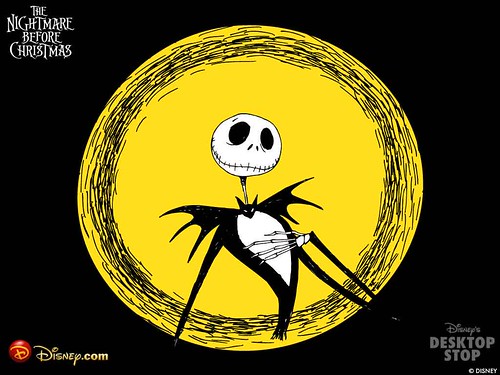 exaggerations brings out the expressive qualities of the character.
In that sense, you should always be daring to go out of the box with your exaggeration. And you should be thinking like a graphic designer when it comes to the overall silhouette of your character, and its relation to its sub-shapes.
Incredibly well done Oscar winner feature animation of recent years "The Triplets Of Belleville" can be a beautiful example of the exaggeration I'm describing here. Mickey Mouse, Pink Panther, Bart Simpson, Smurfs and etc., could easily demonstrate us the power of silhouettes.
Arguably one of the most beautiful films on the study of shapes, patterns and forms in animation is Richard Williams' broken dream - and probably one of the most important projects of his life - "The Thief and the Cobbler" I'd strongly suggest trying to find his original animatic to the ones who are curious on the subject, not the later-completed commercial version though...
We all know that it is hard to create art sometimes no matter how hard we try, or how talented/experienced we are. Point is, keep everything that is more than a scribble. Value you own work, no matter how simple or insignificant it seems to you.
You'll never know when you'll be needing it and how easy will be for you to develop it. Unless you are trying to create a reference drawing for a character to be modeled in 3D, avoid drawing it in a crucifixion-like straight pose.
 Creating a character requires a distinct personality, a universe that the character belongs to when thinking of its environment, and a mood that the character resonates when thinking of its colors.
If you are designing this character for an animation or a comic, it will be very useful to start thinking it as a three dimensional object. Because going forward, you'll have to figure out how it will look at different poses and angles.
Making refined turn-around drawings will nail down the character for anyone who'll be using it: Make your turn-around drawings on a single page right next to each other.
Draw parallel horizontal lines corresponding to distinct body parts of your first character drawing like the neck, the eyes, the shoulders, the belly, the knees, the feet and etc...

Use its limbs freely to perform what that character does...
If you are drawing a character for an illustration or painting, you are much more flexible I should say. Still art can capture only a moment, thus only one pose, one angle.
FUNDAMENTALS You need to think of the most expressive and emotive shapes in your piece. Positive and negative shapes that is. Where in comics, and animation especially, you'd have to consider the re-productibility of your character, in other words its efficiency and simplicity for future episodes.
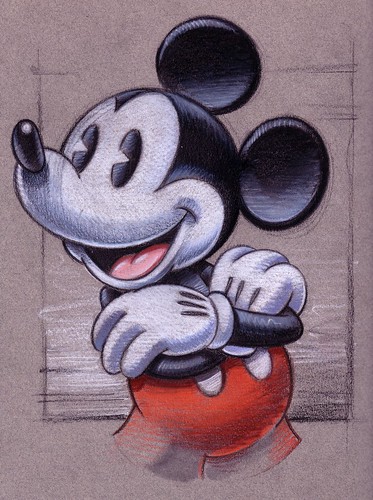
The importance of a clever combination of simple shapes (familiar geometrical forms) kick in right at this point: Because, if you break it down, all that Bart Simpson, Pink Panther, or Mickey Mouse is really made out of are a bunch of triangles, rectangles and spheres of different sizes...
Here I should mention that since the early years of animation it is conceived that round shapes versus rectangular shapes create less strobing on the screen, and drawing characters with less accessories (without unnecessary details) and less fingers are very efficient and economic ways to produce good quality work in this labor-intensive and tedious art form.
MAKE IT MEMORABLE Today I look around and see an abundance of cartoons, characters and stories. However, I'm personally having a hard time in finding distinctive and memorable artwork like I used to when I was a kid.
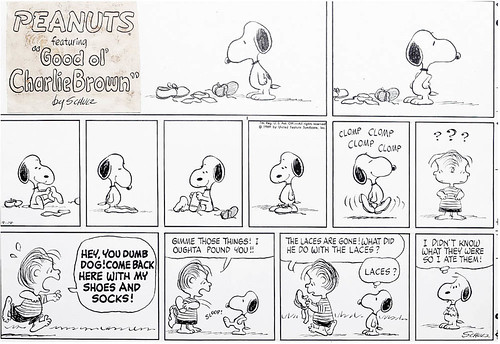
You may think that I'm a romantic stuck in the past, and you may be right! But I'm really having a hard time today finding something authentic inside the billions of zillions of reproductions of the same fairy, the same robot, the same zombie and the same warrior type.
How many different pictures of the same big-boob lady holding the gun can you picture in 1 second? I bet I was exposed to at least hundreds of them in the past few years. Though none of them was carved into my head like, lets say, the image of Snoopy.
Not to make a distinction here between the cartoony styles and realistic artwork. It's not about the genre, it's about capturing the magic. After all, who could forget Frank Frazetta's paintings, or H.R. Giger's Biomechanical aesthetic for that matter?
Note: http://www.animationarchive.org/ is a web site I've recently discovered. It is one of the greatest resources to the hart of the very art form we all have been in love with for decades: animation. Valuable articles within the site are the best road maps for all traditional/digital character artists, at least for the ones who are trying to become a little more than a digital craftsman constantly chasing the latest plug-in. Check it out, look around, it will definitely expand your vision.
Jeff Treves
http://jefftreves.com/
[Some pictures are from Google images]
"Thank you Jeff for your contribution to Subconscious Tonic." -kelada
Wednesday, November 28, 2007
Do I really need an internship?
YES!
Real-world experience is very important as you begin your graphic design career path. I think it's ideal for you to do it while you're in school, as that will give you a head start on the competition once you graduate.
Most schools have career counselors who will help you find internship opportunities, or even ask your instructors. Another great place to look is your local student graphic design organizations. Get involved - if you're not, others are getting there before you! [Look at the local organization links over on the right side. ->]
Internship can be hard to find, especially depending on when you graduate. Graduations usually happen in May and December. Those are usually when companies are looking to find interns. Good grades, a good attitude and a good portfolio will get you to the front door. But don't forget, it's also about who you know, especially in this business! So mix and mingle and become friends with everyone. After all, you never know who's looking for someone just like you.
Most organizations are looking to have an intern to run their errands, and although this happens mostly in advertising agencies, it's still not a bad set up. You get to see the way things work around the different departments, plus you have a very good chance of participating with special events and parties.
Sometimes, it's not just about running errands. You're there to be helpful, and do the little things other people don't have time for. So what's in it for you? Again, you get to see how things work, the processes and timelines. You get to see how the hierarchy of approvals go, and how to work with clients.
Always be respectful and friendly. They will remember you, and seriously consider inviting you to stay on longer. Try to walk away with something under your name - that means, get friendly with the art director and ask how you can help.
If you're given a project - especially as an intern - don't do half-ass work. Be as thorough as possible, and that includes research. If you have to, take the extra time, even if it's after hours, to work on it. Remember, what you're creating represents YOU and nobody else! Who knows, you may impress someone so much, you'll even be surprised.
It can be a rough world for us graphic designers, and having an internship is a great way to start crawling in the business. It's not unusual to have more than one internship, too. Consider working at an agency, and an in-house art department. Get creative on expanding your portfolio.
Let me know what your experiences have been as an intern? Tell us where you've worked and some tips on surviving!

Thursday, August 2, 2007
What do I need to start a business?
You gotta have:
A Good Name Choose a name that expresses your creativity, professionalism and objective of your business. Avoid using the word "Freelance" in your title, you may use it casually if it comes up in conversation. Once you pick a name, come up with several backup names in case someone else has registered that name.
Next, go to the local court house, find the "Assumed Name Office." Once you're there, that person will search the county records to find out if someone has already registered that name. If they haven't, you're in luck, pay them the $12 bucks (or whatever it is now) and you'll get a paper certificate showing the county you registered the name. Congratulations, you have nos received your official DBA (Doing Business As ..." A DBA, also known as a Sole Proprietorship is not the same as Company. These are legal terms for the US Government to determine how you will pay your taxes. With a DBA, you will be paying taxes using your social security number.
Sales Tax Many people don't think of this, but if you want to do business LEGALLY, you must get a sales tax ID. Basically this means, you are charging sales tax to your client, which you then have to pay to the state. (Regardless of their method of payment.) Once you get your DBA, take your drivers license and DBA to your local State Comptrollers Office. They will ask you a bunch of questions about what kind of business are you doing, where you live, etc. They do this because sales tax is different depending on WHERE you will be doing your work. For example, Harris county is 8.25% but outside the city limits, Harris county may be 6.25%. Yes, you will have to learn how to pay your taxes and the laws with running a business. The State Comptroller Office will be glad to explain things to you.
The Right Tools What's the point of being a graphic designer if you don't have the right tools? Unfortunately, when you have your own business, you have to spend the money to keep up with the software versions and equipment. Your clients expect this of you, and are paying for the quality not only in your work but in the tools you use. Be on top of your game, and you will get more business.
A Place to Work You can work anywhere as a graphic designer. It's probably a good idea for you to get a laptop you can use to travel with. Sometimes the client will expect you to work at their locations for certain projects or design checks. You can setup a dedicated space at home for your office and can get a tax break.
Create a system for organizing your files, invoices, etc. that are PRINTED and can be accessible without your computer. Losing a clients file or work is just not acceptable, and you will pay for mistakes like this. The last thing you want to have is a bad reputation. It's a small world!
Web site With Your Own Domain I have a saying, that if they don't have a Web site, don't do business with them. A Web site is a business' image, if there is no image, there is a feeling of being unprofessional and unreliable.
Why on earth would you NOT have a Web site if you are a graphic designer? They are important for photographers as well. No Web site = suicide for your business. Getting your own domain is cheap, and there are hundreds of trusted companies to host your site. I use doteasy.com. Don't use a free host that uses ads. Choose a short, memorable domain address.
Look and Play the Part When you meet with clients, dress professionally -- even if you are expressing yourself. You are representing your company now. Your clients want to feel confident that their investment in you is a good one. This means, not only dressing professionally but acting professional in all your correspondence and interaction with them. Timeliness and constant follow-up is key. Odly enough, even though technology is part of the DNA of the new design generation, you guys don't check your e-mail often enough. Learning to write professional e-mails is EXTREMELY crucial in getting and retaining your business relationships. ALWAYS read and reread your e-mail before you hit "send."
Sell Yourself Remember, you are in the business of communication; therefore, you must understand, you are selling yourself as a product as well. To succeed as a freelance designer, you will have to market and sell yourself, in what can be uncomfortable until you get used to it. Cold calling, advertising online and in the newspaper, forums and more importantly and reliable -- word of mouth (Networking).
Other things you may experience ...
1) You will get bad clients from time to time. I find these to be small businesses with very low or no budget.
2) You'll have to bust your butt to establish credibility as a business and surpass the competition. You'll find that it's easy to do if you're truly talented and have great networking and negotiation skills. Take a class or seminar to give you a boost in the areas you don't feel too confident in.
3) Be patient. It takes time to get established.
4) Freelance graphic design isn't for everyone. Many people work best in agency situations.
Do any of you have any other advice you'd like to add? Maybe some of your own experiences in starting a business? Let us know, select the comments link below.
Saturday, July 7, 2007
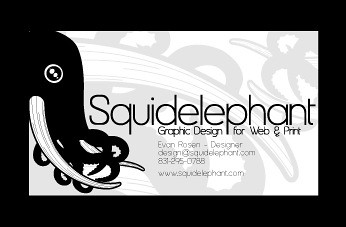
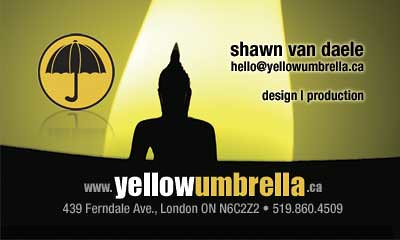
How do I make a darn good business card?
First of all, you have to define "Darn Good."
Darn Good - adj - communicates effectively through the use of GOOD layout, typography and color. Catches the eye, and facilitates staring and comments like "Hey, this is a really cool card!".
This means your card must be:
1. original
Some would say nothing is original. But, I disagree. If you're having a hard time being "original," research some business cards you like and take note of what's really "effective in communicating." You can also look at some nasty business cards and ask yourself, "What would I change?"
2. simple - KISS (Keep it simple stupid)
Clutter means chaos. Chaos means hard to find information. Hard to find information means you're not communicating. Not communicating means people won't hire you because you're supposed to be the EXPERT in visual communication! Do some research! USE WHITE SPACE! (This doesn't mean it has to be white, you can use other things like visual texture.)
Just be sure to make the first impression of your card be a reflection on what you do. If the card if for an architect - make the card reflect the personality and tone of that industry.
3. legible
The first impression of a card is, how professional is the designer? It's easy, can it be read with squinting? Is the type too small? (not a good technique) Use at least 9 point on your print work. Another problem with legibility on business cards is color contrast. Don't use opposite colors on the color wheel unless it's done for focal point.


show contact information, first and foremost!"
You can use serif or sans serif fonts -- it really doesn't matter here, just as long as they can be read. Using more than 2 typefaces can be distracting and can reduce legibility. Don't do weird stuff with your type like make it go around in circles, or off in different directions. It makes it hard to FIND the info. If I were to do this with type, I'd limit the information to be only about 10 characters each line. Use a focus group if you aren't sure how it will be perceived.
4. with correct information
Give people the correct contact information. If you're changing your e-mail address to be more professional -- be sure to check your e-mail every day! If people are trying to contact you and you aren't responding, this gives a sign that you aren't responsible, or dependable or professional. Get it together!
5. with necessary information
Okay - all you REALLY need on your business card is: First/Last Name, Phone, E-mail, Title. If you have a business, you will add your Business Name, Fax Number. That's it. No mailing address is necessary, believe it or not. (This works for any business, any industry.)
You'll be surprised at how many cards I've seen from graphic designers who forget to put what they do. I end up with a card with someone's name and phone number. I can't remember who the heck that was! Make your card unforgettable!
If you're using a logo - that it remains large enough to be recognized. Be consistent on the placement and size of the logo throughout all your printed materials.
6. a normal size
The business card must be the standard size - 3.5" x 2" (vertical or horizontal) - and must be able to fit in a wallet or business card case. What happens if it doesn't? Someone will throw it away or cut it up to make it fit.
You wanna get funky? If you have the money and the creativity, experiment with die cuts. Rounded corners, other shapes or holes. Just make sure, at the end of the day, it fits in a wallet.
7. printed nicely on nice card stock
Should your promotional piece have a gimmick? Here’s an example of how some cards aren’t printed on actual card stock. I really like 120lb stock. Aqueous coating is nice too that gives you a high-gloss, scuff-resistant coating. But it really depends on the message you're trying to give. It's about the whole experience.
If you have any ideas or examples of business cards you've made, please share them with me, and I'll post them on the blog. Post your comments by selecting the comments link below.
Friday, July 6, 2007
Should I go to a university or 2-year-school?
That is a very personal question and it's really up to. There are benefits to both, depending on your goals.
People choose a 2-year-school to receive a diploma because it's a much faster, intense program.
They are both a great education, you may just get more learning opportunities in a 4-year-school than you would in a 2-year program. Design agencies don't care what you have, as long as you have one of these. What it ultimately comes down to is your personality, attitude, portfolio and your true talent.
In conclusion, it is rare, but possible, to become a successful graphic designer with specialized training -- it really happens by being at the right place, right time and having the tenacity to want to learn. But for most people, attending a school and earning a graphic design degree is the only way to go. When you get into a good graphic design program, you are getting the foundation you need to set good habits in becoming a graphic designer.
Which program did you go through? Why did you make that decision? Post your comments by selecting the "comments" link below.
Sunday, July 1, 2007
Do I really need a graphic design degree?
Ok George, so you want to get into graphic design?
You probably fit in one of two categories:
1. you're a great artist (illustrator, painter, etc.) or
2. you have no clue about art
This is a common question for people who are about to graduate from high school. They have an interest in a graphic design career and wonder if they need to get formal training. Often times, students think that, just because they learned the basics of a couple design programs like Photoshop or Flash, they can take that skillset and get a job without going back for specialized training.
Yes, I believe you should continue your education. Do this to learn the technique, history, theories and best practices. And, unless you invest in your personal graphic design library, chances are you won't learn this, or you'll just assume you know it already. This is the value of getting a certificate or degree in graphic design. It's also a way to learn from other people, other thinking/problem solving styles and by asking questions and getting critiqued. You will grow and mature much faster and better in this type of learning environment.
Keep in mind, graphic design is not just about being creative or learning software, it's about visual problem solving and learning practical, client expectations. If you're choosing graphic design just because you want to make things look "cool," you're not going to succeed in this business.
Graphic designers are specialist in visual communication. You will be using design, layout, typography and color to communicate and have your audience think, feel or do something. You are selling ideas, you are selling emotion. By going to school, you will understand how these elements fit together and understand the psychology behind it. You will be able to clearly identify the difference between good design and bad design.
Colleges with design programs have built relationships with local businesses and employers in the industry and, will often times, have job placement opportunities.
All good graphic design programs will be geared toward building your portfolio to present to potential employers. You will work on a variety of projects for you to experience the process of concept to completion on a variety of media.
What do employers look for?
Employers prefer you have a degree or certificate in graphic design. They will choose someone who does before they choose someone who doesn't. It's very competitive, and you have to be on top of your game.
An employer will quiz your ability to problem solve by asking what you would do in certain scenarios. They will ask you specific questions to know if you know the program -- what are the steps to achieve this or that?
They want to know if you have a nice personality (non-egotistical, boastful, full of it, cocky, got the point?) and will be able to work and take directions from others. They are looking for your thorough knowledge of design principles and theory and your ability to use typography and color very well. Can you sell an idea? They may ask indirect questions to find this out.
What have been your experiences (challenges and/or advice)? Select the "comments" link below to post your response.
How do I write a standard resume that's not so darn boring?
Hi Jess - So you want to know how to write a resume that looks like it came from a designer? Do you have to have one that's 8.5" x 11"? YES (take a look at the other posting about "Getting ready for an interview.")
Why do you need a standard resume anyway? (1) to fax, and (2) most companies are traditional and have a filing system they like to stick to. That's pretty much the only reason. Go ahead and get freaky with your resume, you have the right to. Just have a regular one too.
Don't think that just because you're a graphic designer, you have to show something exquisite in your standard resume. In fact, many people get burned here because they over do it. The problem I see most is very small type. Keep in mind - there's a chance that your resume will get passed around within the department or even faxed out. Keep the type on your standard resume 10-11 pt. Yes, you should create this in our lovely Microsoft Word. Don't design your standard resume in InDesign or some other layout program. Keep it simple, because it creates less hassle later when you try to send it or update it.
The layout
Believe it or not, being conservative is really the way to go. Use white space to your advantage here, and don't let the text over-crowed the space. Please avoid funky art work and text placement. Avoid adding any photos or visual samples at all. Your standard resume should be text only. Yes, you can do a gentle treatment with simple lines, or what have you. The emphasis should be your content -- let the type do the talking. An agency will appreciate your simplicity as an entry-level designer.
If you want people to see your art ingeniousness, save it for your interview when you wow them with your portfolio.
Here's the order of your resume:
HEADER Create your own letterhead. Here's your chance to get creative. If you have an online resume or portfolio. This is a great place for you to put the url. Make your name large! (at least 18 point) and yes, put all your contact info on there, including your address. You MUST have an e-mail address, as this is the preferred way companies contact (for some reason). Your e-mail address should be professional not cutiemuffin824897@yahoo.com. Please, if you're gonna be professional, do it all the way.
OBJECTIVE Should be only one sentence and get to the point. "Seeking a position as an entry-level graphic designer for a local design boutique."
EDUCATION Most recent on top. State the name of your college or university, the degree you are receiving and the year your graduate. If you're GPA is lower than 2.5 -- do not put your GPA. (Be sure to spell your school name and degree name correctly. You'll be surprised, that this is a VERY common mistake.) Do not put your high school. Only put your higher education, and YES, even if you didn't finish your degree. If you're still in school you can say "Expected graduation: 12/07"
EXPERIENCE Again, put the most recent on top. Start with the company name and dates (M/YR) on one line. Next line should be your title. The description of your responsibilities SHOULD BE BULLETED with one statement on each line. Be sure to start each line with a verb, "maximized profits by 23%" or "trained employees to ..." Got the idea?
AWARDS/COMPETITIONS Simply list out the award, who gave it to you, and the year. That's all you need here.
CONTINUED EDUCATION Say the class or program you're taking and the year.
PROGRAMS/SKILLS You can list these all the way down, but don't be afraid to use your tabs and create evenly spaced columns. Try to organize things in some fashion. All print programs together, all Web programs together, all soft skills together, etc.
REFERENCES I think it's better to attach this to your resume. (ON A SEPARATE PAGE BY ITSELF). Forget the notion of "reference available upon request." Who the heck came up with that nonsense?? It just saves you trouble of having to dig it up for someone. It also shows that you're more confident about people researching your credentials. Hook em' up already.
In general, your resume should have ...
•Headers should be bold and contrasting from the body text. I like to see the headers off to the side with the copy indented, making it easier to read the sections.
•Don't use funky colors. Think KISS (Keep It Simple Stupid)
•Keep your resume to one page with your references on another. The only reason you would need to go past one page is if you've got a lot of experience that really will justify your credentials for that next position.
•Don't forget to use WHITE SPACE!!
•Use a focus group. Show your resume around and tell them to give you the down low on their first impression. You should never make an employer strain their eyes trying to find something. I can tell you right now, they're gonna trash it. There are many other candidates who have easier resumes to read!
•Keep the layout consistent - especially with the em dashes. (<-- look it up)
I hope this helps, Jess. Feel free to place your comments by selecting the "comments" link down below.
What things have you seen in other creative resumes? Select the "comments" link below to post your response.

How much work should I show in my portfolio?
Okay "Marc"- here's the deal. This can be a deal breaker or a deal maker for you, and there is definitely a fine line. People are visual and make decisions based on first impressions.
What usually happens is, students have the tendency to show as much work as possible. STOP - DON'T DO THIS - IT'S A MISTAKE! It's a mistake that's obvious to people in the industry that this person is "totally amateur". Yes, it's important for your book "portfolio" to be put together nicely for a couple reasons.
1. the design agency is looking for your ability to story tell and create a thought process -- order
2. they are seeing if you pay attention to detail and can be strategic in the samples you show. This means, you are choosing pieces for a reason.
(Here's the biggest mistake I've seen students do: they put samples that they like the best, or they worked the hardest on. Often times, you'll find that companies are not looking for things that look the best, but that COMMUNICATE the best.)
If you chose wisely, you picked a portfolio with a "binder" that allows you to remove blank sheets. NEVER LEAVE BLANK SHEETS AT THE END OF YOUR BOOK Take them out and store them flat - under your bed and never in the car. (Heat from the car makes the plastic film warp and is unrepairable -- you gotta go buy more.)
Here's what I'd like to see in your portfolio ... work that shows:
1. good use of color theory
2. really spectacular use of typography
3. a sample of a magazine spread or something like it to see your publication layout skills.
4. a sample of direct mail
5. a sample magazine ad AND spread
6. a sample of branding (designed logo, business card and materials matching that theme)
7. a sample of some sort of product packaging like a cereal box or a table tent, just something that's intended to have a die cut and be multi-dementional
8. a sample of a campaign (magazine, billboards, in-store campaign, guerrilla marketing, etc.)
Here's what you should get out of this: Choose quality over quantity. Have no more than 12 pieces (total) and no less than 7 pieces (total). Be sure to customize your portfolio for each interview you have, placing the samples that best match the company's work and client.
Any other questions Marc? You're welcome to respond to this posting with a comment. Click the "comment" link below.
What advice do you have for organizing a portfolio? Select the "comments" link below to post your response.

Wednesday, June 20, 2007
How much should you get paid working at an agency?
Want to know what you're worth? Find out what others are getting paid in the creative industry here in Houston. Visit the AIGA|Aquent Design Salary Survey to find out.
What positions are in the survey?
owner, partner, principal
These people are responsible for running the business and managing the employee and business model.
creative/design director
This is the creative head in the agency, whether in-house or agency. Responsibilities include developing graphic design, advertising and publications.
art director
This person comes up with the concept and stylistic direction for the design staff including production artists, photographers, illustrators, vendors, printers or anyone else involved in the project's development. The art director generally selects the vendors, and if there isn't a creative director on staff, has final creative authority.
senior designer
The senior designer is responsible for conceptualizing and providing solutions from concept to completion and in some cases, may direct junior designers who generate the comps, create layouts and final art to present to the client.
designer
A designer is responsible for the concept and design of graphic media including collateral, corporate identity, publications, large format graphics and multimedia interfaces.
entry-level designer
If you're an entry-level designer, you have 1 to 2 years experience out of school and requiring mentoring in all aspects of design conception to creation.
print production artist
This person understands layout, typography, color theory and is able to take instructions from a designer to create a complete layout. These people work well in InDesign, Quark, Photoshop and Illustrator.
web designer
A Web (Web is a proper noun) designer determines and develops the look and feel for Web sites and is responsible for the navigation ad visual execution.
copywriter
A copywriter (not copyrighter) is someone who writes, edits and proof material. Many copywriters are responsible for thinking and developing strategic messages or stories. Direction is often given from the creative director for the tone.
Source: AIGA.org
What do you do at an agency, and how do you interact with the creative team? Select the "comments" link below to post your response.
Wednesday, June 13, 2007
Where do I find clients?
What an easy question to answer! Living in Houston, you have access to so many networks and resources.
What do I mean by networks?
Networks are your support system where you can share information and services. Networking events are often hosted around food and drinks -- "happy hour." Every industry has networks, and Houston has an ENORMOUS network for young creative professionals.
Check on the links on the side of the blog for local and national organizations you should consider joining. They offer many member benefits and even have student membership rates and discounts!
Back to the real reason you're reading this ... We all know the best type of advertising is word of mouth. What better way is there to advertise than networking? You pass the word around about what you can offer and someone's eyes will open wide with curiosity. They'll think, "Oh, I need someone like that." or "Oh, I have a project I need help with." And there you go, you get work. It's a chain reaction. If you do good work, they will refer you and so on.
Many designers are now posting their portfolio on these organizations' Web sites. I believe some are fee based, but I don't think you need to do that at all. Just get away from the computer, create some snazy business cards and get the heck out there and NETWORK!
If you're not interested in doing your own graphic design business, and you're just looking to do graphic design with a company, check out the local organization's Web sites for job postings. Also, there are many staffing organizations like Aquent, Art Squad and The Creative Group. You may find short term projects with these folks as well as full time opportunities.
What has been your experience finding clients? Is there one place you always look? What advice would you give? Select the "comments" link below to post your response.


